
Aadvik Agastya
Aadvik Agastya is a writer, reader and lifelong explorer of ideas, drawn to the questions that sit at the intersection of knowledge, curiosity and imagination.
Writing under a name inspired in part by India's long intellectual and storytelling traditions, Aadvik approaches the world with a simple belief: knowledge becomes meaningful when it awakens the desire to know more. The name Agastya recalls the legendary Indian sage associated with learning, inquiry and the transmission of knowledge across traditions—an association that reflects the spirit behind his work without defining its boundaries.
His writing ranges widely because his curiosity does too. Through Quropedia, he explores science, space, history, ancient civilizations, mysteries, technology, philosophy, consciousness, nature, spirituality and the unanswered questions that continue to challenge what we think we know. Rather than treating knowledge as a collection of isolated facts, he looks for connections—between the ancient and the modern, evidence and possibility, human experience and the larger universe.
Through BookKad, that same curiosity turns toward books and the ideas contained within them. His book notes go beyond brief summaries, examining arguments, stories, concepts and implications so that readers can understand not merely what a book says, but why its ideas matter and how they connect with the wider world.
Aadvik's approach is neither to accept extraordinary claims uncritically nor to dismiss intriguing possibilities too quickly. He prefers the more interesting territory in between: examining evidence, questioning assumptions, separating what is known from what is believed, and remaining comfortable when a question does not yet have a final answer.
Across both Quropedia and BookKad, his purpose is ultimately the same—to make learning feel less like an obligation and more like discovery.
Because a good answer can satisfy curiosity, but a great one usually creates another question.
Explore Aadvik Agastya's collected works ↗ Identity & verification ↗
Book Notes by Aadvik Agastya

September 27, 2026
Good to Great: Summary, Key Ideas & Insights
Why do some companies make a difficult transition from solid performance to sustained excellence while apparently comparable companies do not? Jim Collins’s Good to…
Read the Book Note →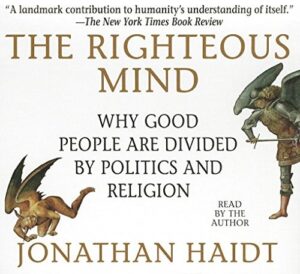
September 27, 2026
The Righteous Mind: Summary, Key Ideas & Insights
Jonathan Haidt’s The Righteous Mind explores why people often reach moral conclusions quickly and then construct explanations for those conclusions afterward. Drawing on moral…
Read the Book Note →
September 27, 2026
Quiet: Summary, Key Ideas & Insights
Susan Cain’s Quiet challenges a cultural assumption that is easy to overlook because it often appears normal: the idea that confident, highly social, outspoken…
Read the Book Note →
September 27, 2026
Predictably Irrational: Summary, Key Ideas & Insights
Dan Ariely’s Predictably Irrational challenges the assumption that human beings make decisions by calmly calculating costs and benefits. Its more interesting claim is that…
Read the Book Note →
September 27, 2026
Influence: The Psychology of Persuasion: Summary & Key Ideas
Why shortcuts work Cialdini’s framework begins with a basic fact about human cognition: people cannot investigate every claim, seller, request, and social interaction from…
Read the Book Note →
September 27, 2026
Thinking, Fast and Slow: Summary & Key Ideas
Daniel Kahneman’s Thinking, Fast and Slow examines the ways people form judgments and make decisions. Drawing on decades of behavioral research, Kahneman describes two…
Read the Book Note →
September 27, 2026
Grit: Summary, Key Ideas & Insights
Angela Duckworth’s Grit asks a deceptively simple question: why do some people continue developing toward difficult goals long after the initial excitement has disappeared?…
Read the Book Note →
September 27, 2026
Essentialism: Summary, Key Ideas & Insights
Greg McKeown’s Essentialism is a philosophy of disciplined prioritization. Its central question is simple but demanding: what is truly essential? Rather than teaching people…
Read the Book Note →
September 27, 2026
Mindset: Summary, Key Ideas & Insights
Carol S. Dweck’s Mindset examines how beliefs about ability influence the way people respond to difficulty, criticism and failure. The book’s central distinction is…
Read the Book Note →
September 27, 2026
The 7 Habits of Highly Effective People: Summary & Key Ideas
Stephen R. Covey’s The 7 Habits of Highly Effective People is often treated as a productivity book, but its framework is broader. Covey argues…
Read the Book Note →