
Aadvik Agastya
Aadvik Agastya is a writer, reader and lifelong explorer of ideas, drawn to the questions that sit at the intersection of knowledge, curiosity and imagination.
Writing under a name inspired in part by India's long intellectual and storytelling traditions, Aadvik approaches the world with a simple belief: knowledge becomes meaningful when it awakens the desire to know more. The name Agastya recalls the legendary Indian sage associated with learning, inquiry and the transmission of knowledge across traditions—an association that reflects the spirit behind his work without defining its boundaries.
His writing ranges widely because his curiosity does too. Through Quropedia, he explores science, space, history, ancient civilizations, mysteries, technology, philosophy, consciousness, nature, spirituality and the unanswered questions that continue to challenge what we think we know. Rather than treating knowledge as a collection of isolated facts, he looks for connections—between the ancient and the modern, evidence and possibility, human experience and the larger universe.
Through BookKad, that same curiosity turns toward books and the ideas contained within them. His book notes go beyond brief summaries, examining arguments, stories, concepts and implications so that readers can understand not merely what a book says, but why its ideas matter and how they connect with the wider world.
Aadvik's approach is neither to accept extraordinary claims uncritically nor to dismiss intriguing possibilities too quickly. He prefers the more interesting territory in between: examining evidence, questioning assumptions, separating what is known from what is believed, and remaining comfortable when a question does not yet have a final answer.
Across both Quropedia and BookKad, his purpose is ultimately the same—to make learning feel less like an obligation and more like discovery.
Because a good answer can satisfy curiosity, but a great one usually creates another question.
Explore Aadvik Agastya's collected works ↗ Identity & verification ↗
Book Notes by Aadvik Agastya

September 27, 2026
Deep Work: Summary, Key Ideas & Insights
Why deep work has become difficult Newport argues that modern knowledge workers often operate in environments designed for responsiveness rather than concentration. Email, messaging,…
Read the Book Note →
September 27, 2026
The Handmaid’s Tale: Summary, Key Ideas & Insights
Margaret Atwood’s The Handmaid’s Tale is a dystopian novel about a woman known as Offred who lives under the authoritarian regime of Gilead, where…
Read the Book Note →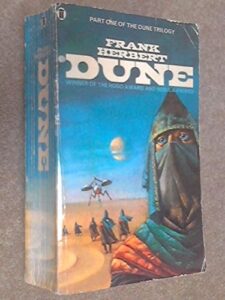
September 27, 2026
Dune: Summary, Key Ideas & Insights
Frank Herbert’s Dune is a science-fiction epic about power, ecology, religion, politics, prophecy, family, and survival. Set in a distant future shaped by aristocratic…
Read the Book Note →
September 27, 2026
The Hobbit: Summary, Key Ideas & Insights
J.R.R. Tolkien’s The Hobbit is an adventure story about Bilbo Baggins, a comfort-loving hobbit whose ordinary life is disrupted when Gandalf and a company…
Read the Book Note →
September 27, 2026
The Great Gatsby: Summary, Key Ideas & Insights
F. Scott Fitzgerald’s The Great Gatsby is a novel about wealth, desire, class, illusion, and the difficulty of recovering an imagined past. Set largely…
Read the Book Note →
September 27, 2026
Pride and Prejudice: Summary, Key Ideas & Insights
Jane Austen’s Pride and Prejudice is often remembered as a romance, but its deeper subject is judgment: how quickly people form opinions, how social…
Read the Book Note →
September 27, 2026
1984 by George Orwell: Summary and 7 Ideas That Still Matter
1984 by George Orwell is a dystopian novel about political power, surveillance, propaganda, language and the struggle to preserve an independent inner life. Its…
Read the Book Note →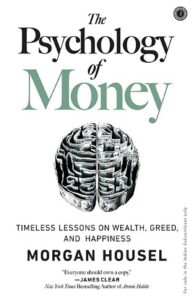
September 27, 2026
The Psychology of Money: Summary and 8 Lessons About Wealth
The Psychology of Money by Morgan Housel examines a deceptively difficult problem: people can understand financial mathematics and still make poor financial decisions because…
Read the Book Note →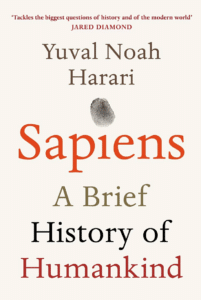
September 27, 2026
Sapiens: Summary and 7 Ideas About Why Humans Rule the World
Sapiens by Yuval Noah Harari attempts something unusually ambitious: it asks how one species of human became capable of organizing enormous societies, transforming ecosystems…
Read the Book Note →
September 27, 2026
Atomic Habits: Summary and 7 Ideas That Can Change How You Build Habits
Atomic Habits by James Clear is a practical exploration of how repeated behavior becomes a system that quietly shapes a life. Its central question…
Read the Book Note →