
Aadvik Agastya
Aadvik Agastya is a writer, reader and lifelong explorer of ideas, drawn to the questions that sit at the intersection of knowledge, curiosity and imagination.
Writing under a name inspired in part by India's long intellectual and storytelling traditions, Aadvik approaches the world with a simple belief: knowledge becomes meaningful when it awakens the desire to know more. The name Agastya recalls the legendary Indian sage associated with learning, inquiry and the transmission of knowledge across traditions—an association that reflects the spirit behind his work without defining its boundaries.
His writing ranges widely because his curiosity does too. Through Quropedia, he explores science, space, history, ancient civilizations, mysteries, technology, philosophy, consciousness, nature, spirituality and the unanswered questions that continue to challenge what we think we know. Rather than treating knowledge as a collection of isolated facts, he looks for connections—between the ancient and the modern, evidence and possibility, human experience and the larger universe.
Through BookKad, that same curiosity turns toward books and the ideas contained within them. His book notes go beyond brief summaries, examining arguments, stories, concepts and implications so that readers can understand not merely what a book says, but why its ideas matter and how they connect with the wider world.
Aadvik's approach is neither to accept extraordinary claims uncritically nor to dismiss intriguing possibilities too quickly. He prefers the more interesting territory in between: examining evidence, questioning assumptions, separating what is known from what is believed, and remaining comfortable when a question does not yet have a final answer.
Across both Quropedia and BookKad, his purpose is ultimately the same—to make learning feel less like an obligation and more like discovery.
Because a good answer can satisfy curiosity, but a great one usually creates another question.
Explore Aadvik Agastya's collected works ↗ Identity & verification ↗
Book Notes by Aadvik Agastya

September 28, 2026
The Seven Principles for Making Marriage Work: Summary, Key Ideas & Insights
John Gottman and Nan Silver’s The Seven Principles for Making Marriage Work presents a research-informed framework for understanding why some relationships remain resilient while…
Read the Book Note →
September 28, 2026
The Millionaire Next Door: Summary, Key Ideas & Insights
Why do some households with ordinary incomes accumulate substantial wealth while people earning far more can remain financially fragile? Thomas J. Stanley and William…
Read the Book Note →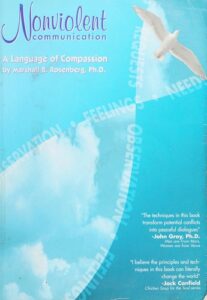
September 28, 2026
Nonviolent Communication: Summary, Key Ideas & Insights
Many conflicts become worse because people argue about positions when the real problem is an unmet need underneath those positions. Marshall B. Rosenberg’s Nonviolent…
Read the Book Note →
September 28, 2026
The Power of Now: Summary, Key Ideas & Insights
What if much of our suffering comes not only from what happens to us, but from the mind’s constant demand that the present moment…
Read the Book Note →
September 28, 2026
The Autobiography of Malcolm X: Summary, Key Ideas & Insights
Malcolm X’s autobiography is not simply the story of a political figure. It is the record of a man repeatedly rebuilding his identity: from…
Read the Book Note →
September 28, 2026
How Not to Be Wrong: Summary, Key Ideas & Insights
Mathematics is often presented as a collection of rules that produce certainty. Jordan Ellenberg’s How Not to Be Wrong explores a more practical idea:…
Read the Book Note →
September 28, 2026
Life 3.0: Summary, Key Ideas & Insights
What happens when artificial intelligence becomes capable of transforming not only individual jobs but the basic structure of civilization? Max Tegmark’s Life 3.0 uses…
Read the Book Note →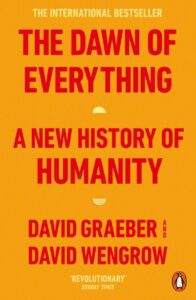
September 28, 2026
The Dawn of Everything: Summary, Key Ideas & Insights
Was human history really a straightforward journey from small egalitarian communities to agriculture, cities, states and centralized inequality? David Graeber and David Wengrow’s The…
Read the Book Note →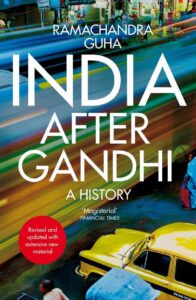
September 28, 2026
India After Gandhi: Summary, Key Ideas & Insights
How did the world’s largest democracy emerge from the upheaval of partition, colonial rule and independence—and how did it manage to remain politically unified…
Read the Book Note →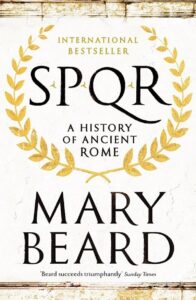
September 28, 2026
SPQR: Summary, Key Ideas & Insights
How did a city on the Tiber become the center of a Mediterranean empire, and how did Roman political institutions survive repeated crises before…
Read the Book Note →