
Aadvik Agastya
Aadvik Agastya is a writer, reader and lifelong explorer of ideas, drawn to the questions that sit at the intersection of knowledge, curiosity and imagination.
Writing under a name inspired in part by India's long intellectual and storytelling traditions, Aadvik approaches the world with a simple belief: knowledge becomes meaningful when it awakens the desire to know more. The name Agastya recalls the legendary Indian sage associated with learning, inquiry and the transmission of knowledge across traditions—an association that reflects the spirit behind his work without defining its boundaries.
His writing ranges widely because his curiosity does too. Through Quropedia, he explores science, space, history, ancient civilizations, mysteries, technology, philosophy, consciousness, nature, spirituality and the unanswered questions that continue to challenge what we think we know. Rather than treating knowledge as a collection of isolated facts, he looks for connections—between the ancient and the modern, evidence and possibility, human experience and the larger universe.
Through BookKad, that same curiosity turns toward books and the ideas contained within them. His book notes go beyond brief summaries, examining arguments, stories, concepts and implications so that readers can understand not merely what a book says, but why its ideas matter and how they connect with the wider world.
Aadvik's approach is neither to accept extraordinary claims uncritically nor to dismiss intriguing possibilities too quickly. He prefers the more interesting territory in between: examining evidence, questioning assumptions, separating what is known from what is believed, and remaining comfortable when a question does not yet have a final answer.
Across both Quropedia and BookKad, his purpose is ultimately the same—to make learning feel less like an obligation and more like discovery.
Because a good answer can satisfy curiosity, but a great one usually creates another question.
Explore Aadvik Agastya's collected works ↗ Identity & verification ↗
Book Notes by Aadvik Agastya

September 28, 2026
Existentialism Is a Humanism: Summary, Key Ideas & Insights
What if there is no universal instruction manual telling us what our lives must mean? Jean-Paul Sartre’s Existentialism Is a Humanism is a short…
Read the Book Note →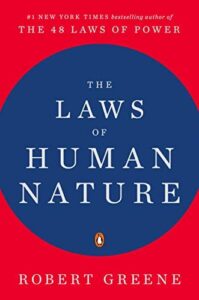
September 28, 2026
The Laws of Human Nature: Summary, Key Ideas & Insights
Why can people who understand human behavior still repeatedly misread other people’s motives? Robert Greene’s The Laws of Human Nature is an attempt to…
Read the Book Note →
September 28, 2026
Capital in the Twenty-First Century: Summary, Key Ideas & Insights
Why can economic growth coexist with rapidly increasing inequality? Thomas Piketty’s Capital in the Twenty-First Century examines the long-term distribution of income and wealth…
Read the Book Note →
September 28, 2026
This Is Marketing: Summary, Key Ideas & Insights
What if marketing is less about persuading everyone to buy and more about finding the people who genuinely need what you make? Seth Godin’s…
Read the Book Note →
September 28, 2026
Prisoners of Geography: Summary, Key Ideas & Insights
Can geography quietly shape political choices before politicians ever make them? Tim Marshall’s Prisoners of Geography argues that the physical world places persistent constraints…
Read the Book Note →
September 28, 2026
In Cold Blood: Summary, Key Ideas & Insights
What happens when a crime is not only committed, but becomes a story that permanently changes the lives of the people who encounter it?…
Read the Book Note →
September 28, 2026
Walden: Summary, Key Ideas & Insights
Henry David Thoreau’s Walden is often reduced to the image of a writer living alone in a cabin beside a pond. The cabin is…
Read the Book Note →
September 28, 2026
The Hunger Games: Summary, Key Ideas & Insights
What happens when a society turns survival into entertainment and makes children perform violence for an audience? Suzanne Collins’s The Hunger Games uses dystopian…
Read the Book Note →
September 28, 2026
The Count of Monte Cristo: Summary, Key Ideas & Insights
Few revenge stories are as expansive as Alexandre Dumas’s The Count of Monte Cristo. What begins with the destruction of one young man’s future…
Read the Book Note →
September 28, 2026
The Girl with the Dragon Tattoo: Summary, Key Ideas & Insights
What if a journalist investigating a disappearance discovers that the real story is much larger than one missing person? Stieg Larsson’s The Girl with…
Read the Book Note →