In Defense of Food: Summary, Key Ideas & Insights
Modern nutrition advice often turns eating into a battlefield of competing claims: low-fat versus low-carb, supplements versus whole foods, individual nutrients versus complete diets. Michael Pollan’s In Defense of Food steps away from that complexity and asks a simpler question: what kind of food system helps people eat well without making every meal an exercise in nutritional calculation?
What is In Defense of Food about?
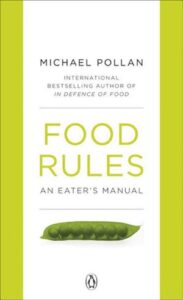
Pollan argues for a shift away from heavily processed “food products” and toward recognizable foods prepared and eaten in ways that fit within ordinary culture. His famous guiding principle can be understood as a rejection of the idea that nutrition labels tell the whole story of eating.
Food versus nutrients
Pollan challenges the tendency to think of food primarily as a delivery system for isolated nutrients. Scientific knowledge about nutrients can be valuable, but reducing meals to individual compounds can obscure how foods interact as whole dietary patterns.
A food may contain many components that work together, while research on one nutrient may not capture the effects of the entire eating pattern.
The problem of highly processed food
Industrial food can make eating convenient, inexpensive and consistent. But processing can also change texture, flavor, shelf life and the way people consume calories.
Pollan’s concern is not that every processed item is automatically harmful. It is that a food environment dominated by heavily engineered products can make overeating easier while distancing consumers from the original ingredients.
Culture matters
Traditional food cultures often contain rules about meals, portions, ingredients and social occasions. These rules can make eating a shared social practice rather than an individual optimization problem.
Pollan therefore treats culture as part of nutrition. How people eat can matter alongside what they eat.
Eating with attention
The book encourages people to pay attention to meals rather than eating automatically while distracted. Sitting down, preparing food and sharing it with others can change the relationship between appetite and consumption.
This is less about perfection than awareness. A person who notices how food affects hunger and satisfaction may make different choices than someone eating almost entirely through habit.
The role of cooking
Cooking reconnects people with ingredients and makes the structure of meals visible. It also makes highly processed convenience foods less central.
Pollan’s argument is therefore partly cultural: if people lose the skills and time required to prepare food, they become more dependent on whatever the industrial food environment offers.
Why nutrition science can become confusing
Scientific evidence evolves. Studies can isolate variables that are difficult to isolate in real life, and headlines often convert modest findings into dramatic dietary claims.
The book encourages skepticism toward miracle foods and single-nutrient explanations while still recognizing the value of scientific research.
Pollan’s critique of nutritionism
One of the book’s deeper targets is what Pollan calls “nutritionism”: the tendency to treat nutrients as the primary reality of food. Under this view, a meal becomes a collection of fats, carbohydrates, proteins, vitamins and other components. Pollan argues that this way of thinking can create an illusion of precision while losing sight of how people actually eat.
The critique is not an argument against nutrition science. It is an argument about scale. Nutritional knowledge can identify important mechanisms, but people eat meals, not isolated nutrients. A useful dietary understanding therefore has to connect scientific evidence with whole foods, habits and culture.
Industrial processing and the modern food environment
Pollan examines how industrial food production can reshape eating behavior. Highly processed products can be engineered for convenience, durability, intense flavor and easy consumption. Marketing can then transform these products into lifestyle signals rather than simply sources of calories.
The result is an environment in which the easiest food to obtain is not always the food that best supports the kind of eating pattern the consumer intends to follow. This is why Pollan’s argument is partly about systems and environments, not merely individual willpower.
Traditional diets and the wisdom of patterns
Pollan looks to traditional food cultures not because every traditional practice is automatically healthy, but because cultures have accumulated patterns of eating that are broader than individual nutrient claims. Meals may have recognizable structures, social occasions, seasonal foods and customary portions.
These patterns can reduce the cognitive burden of deciding what to eat every day. Instead of constantly optimizing nutrition, people inherit a practical food culture.
Cooking as a form of agency
Cooking changes the relationship between consumer and food because it reveals ingredients and processes. Someone who prepares a meal can see how much salt, sugar, oil or other ingredients are being added and can decide how the components fit together.
Cooking also restores time and attention to eating. It turns food from something consumed while doing something else into an activity with its own social and sensory dimensions.
Why simple rules can be useful
Pollan’s short rules are valuable partly because they avoid demanding perfect nutritional knowledge. “Eat food” points toward recognizable ingredients. “Not too much” emphasizes moderation. “Mostly plants” emphasizes a broad pattern rather than a single miracle ingredient.
The point is not that these phrases answer every nutritional question. Their usefulness lies in reducing the complexity that can make healthy eating feel impossible.
Where readers should remain cautious
Food science continues to evolve, and some claims in popular nutrition writing can be more confident than the evidence permits. Pollan’s framework is best understood as a critique of industrial eating and nutritional reductionism, not as a substitute for individualized medical or dietary advice.
Questions the book raises
- When does nutritional science help us, and when does it encourage unnecessary complexity?
- How much does food processing influence eating behavior?
- Could cooking be considered a health practice as well as a household task?
- What happens when food becomes primarily a commodity rather than a cultural practice?
- Can a healthy diet be sustainable without becoming an obsession?
Bookkad takeaway
In Defense of Food is less a strict diet plan than a critique of the way modern eating can become detached from recognizable food, cooking and culture.
Its central idea is that good eating may become easier when we stop treating every meal as a nutritional puzzle and return attention to food itself, how it is prepared and how it fits into everyday life.
This Bookkad article is an original summary and interpretation. It does not reproduce the book and is not medical or dietary advice.
Food as a system
Pollan’s argument is not simply that individual nutrients are good or bad. He examines the modern food system itself: industrial processing, aggressive marketing, large portions and the tendency to reduce food to isolated nutrients. His advice is therefore deliberately simple because it attempts to reconnect eating with recognizable foods and traditional patterns.
The problem with ultra-processing
Highly processed products can be engineered for convenience, shelf life and palatability. Pollan argues that focusing only on the nutritional label can miss the broader question of how food was produced and transformed. The book encourages readers to pay attention to ingredients, preparation and the cultural context of meals.
Eating as a social practice
Meals are not only biological events. They can structure family life, hospitality and cultural identity. Pollan’s emphasis on eating slowly and sharing meals reflects this wider understanding of food as part of social life.
The limits of simple rules
Pollan’s rules are memorable partly because they avoid complicated nutritional calculations. But they are principles rather than universal medical prescriptions. Individual dietary needs vary, and readers should distinguish broad food philosophy from personalized nutrition advice.
Cooking and control over ingredients
One implication of Pollan’s approach is that cooking gives people greater control over what enters a meal. Preparing food from recognizable ingredients can reduce dependence on highly engineered products and reconnect eating with the sensory and social experience of meals.
Culture as nutritional knowledge
Traditional food cultures often contain practical knowledge about portion sizes, preparation and combinations of foods. Pollan does not argue that tradition is automatically correct, but he treats inherited eating patterns as evidence worth examining rather than assuming modern industrial food is necessarily an improvement.
Industrial food and the nutrition industry
Pollan’s criticism extends to the way nutrition can become dominated by isolated nutrients. When food is described mainly through fat, carbohydrates, vitamins or additives, consumers can lose sight of the whole food and the process by which it was produced. His alternative is to restore attention to ingredients and preparation.
Moderation and pleasure
The book does not frame eating as punishment. Meals can provide pleasure, culture and connection. Pollan’s emphasis on traditional eating patterns is partly an argument for recovering those dimensions from a food culture increasingly optimized for speed and convenience.
Food rules as a philosophy of attention
Pollan’s simple rules work partly because they redirect attention from abstract nutritional claims toward the experience of eating. Choosing recognizable foods, preparing meals and eating with others can make food more deliberate rather than automatic. The approach is less about discovering one perfect diet than about resisting a food environment designed around convenience and constant consumption.
Processing and appetite
Highly engineered foods can combine intense flavors, refined ingredients and convenient packaging in ways that encourage frequent consumption. Pollan’s critique is aimed at the larger system that makes these products normal. He asks readers to consider not only what a nutrient does in isolation but what kinds of eating patterns a food encourages.
Tradition and modern evidence
Food choices inside a larger environment
Pollan places individual eating choices inside an environment shaped by packaging, convenience, advertising, price and industrial processing. This matters because people do not choose food in isolation. What is readily available and socially normal can influence behavior before deliberate reflection begins.
Cooking becomes one form of agency within that environment. It exposes ingredients and reconnects eating with culture and social life, even though it cannot by itself guarantee ideal nutrition.
Traditional diets can offer useful clues, but they should not be romanticized. Food traditions developed under particular environmental and cultural conditions, and modern medical evidence can reveal both strengths and limitations. Pollan’s broader contribution is to encourage readers to think about food as food rather than reducing meals to nutrient equations.
You may also want to read